
What is the Golden Ratio: Visual Harmony
The golden ratio, also known as the golden section, golden number, Phi number, or divine proportion, is a mathematical relationship of proportionality associated with perfect aesthetics, harmony, or visual balance.
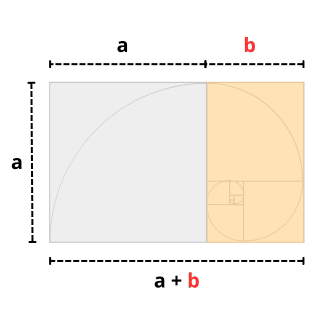
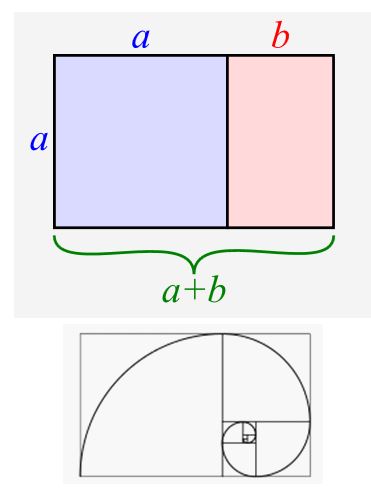
Its numerical value is Phi = 1.618 (represented by the Greek letter φ), which defines a magnitude where the ratio between two elements is equal to the sum of both divided by the larger one.
This concept is not a mere mathematical curiosity; it is the foundation of visual composition in art, architecture, photography, and professional design.
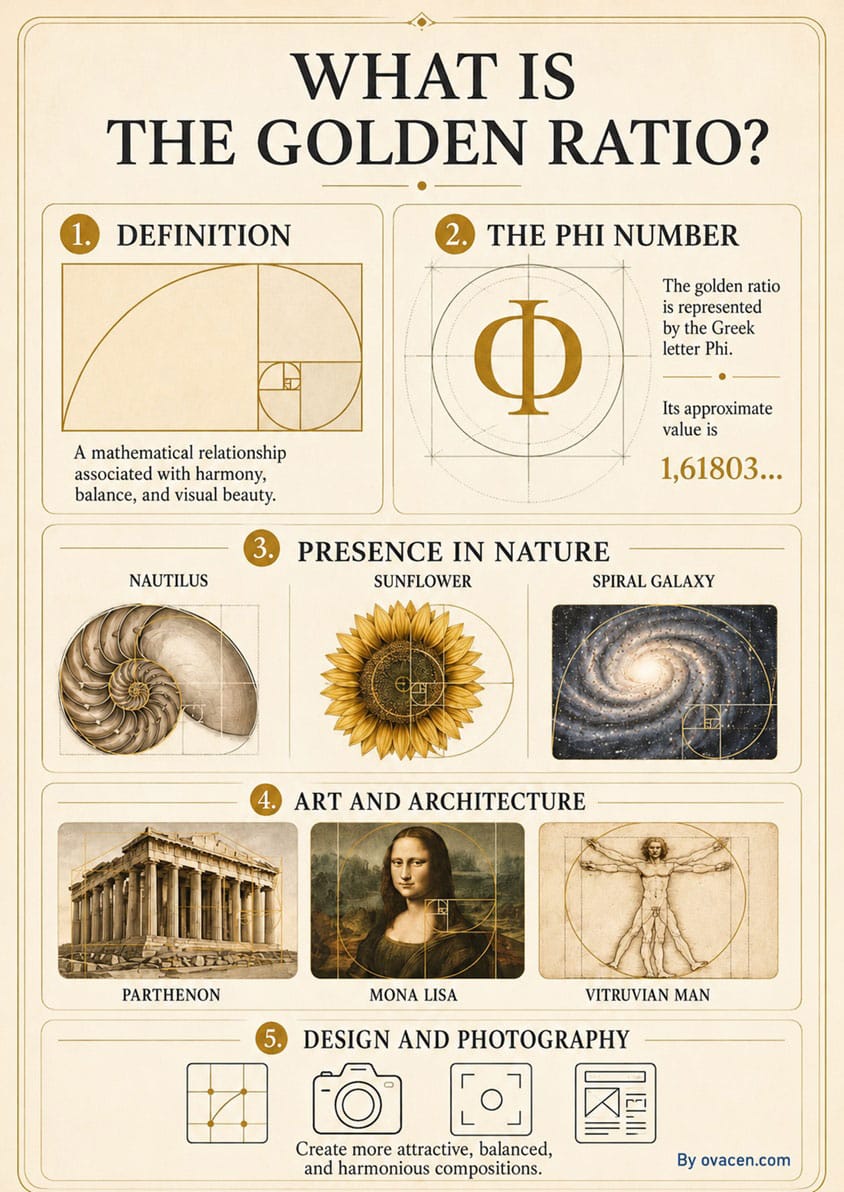
The golden number is the geometric formula that allows the creation of balanced and harmonious compositions—it replicates the growth patterns of nature itself!
Where do we find the divine proportion?
Throughout history, the golden number has been used to achieve “ideal beauty.” Its presence is constant across three fundamental pillars that every designer or artist should know:
- Art and Architecture: From the structure of the Parthenon in Athens to Da Vinci’s Mona Lisa. The great masters used the golden rectangle to guide the viewer’s eye and create a perfect visual hierarchy.
- Nature and Science: It is fascinating to observe how it manifests in the Fibonacci sequence, visible in the arrangement of flower petals, nautilus shells, storms, and even in the shape of galaxies.
- Modern Design and Photography: Today, we apply the golden rule to layout web pages, create iconic logos (like Apple’s), or frame photographs using the golden spiral to achieve a natural balance.
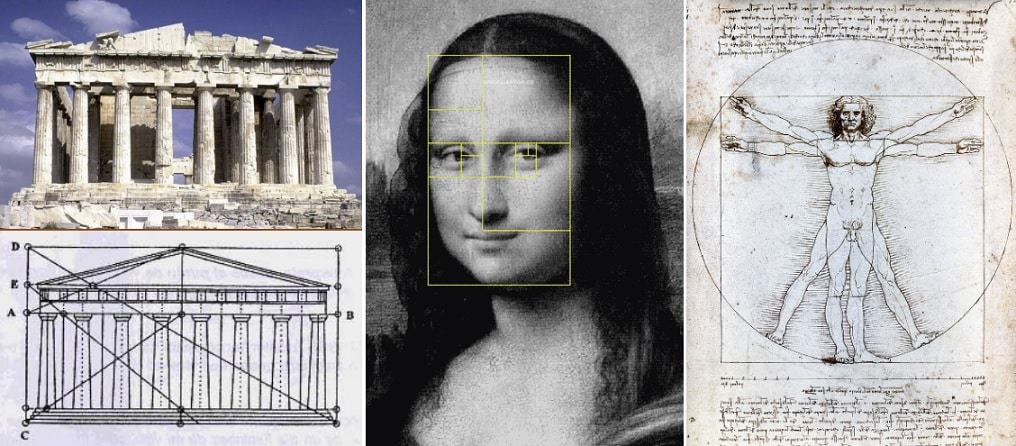
Architecture with divine proportion is not just construction; it is spaces with universal harmony.
For example, historical figures like Michelangelo in the Sistine Chapel or the study of the ideal proportion in the Vitruvian Man demonstrate that this measurement is the key to understanding human and universal aesthetics.
The Fibonacci Sequence and the golden proportion
If we look back at history in search of the concept of divine proportion. Leonardo Pisano, also known as Fibonacci, was a famous mathematician from Italy who dedicated himself to spreading the Arabic numeral system (1, 2, 3…) with a decimal base and a null value (zero) across Europe in his Book of the Abacus in 1202.
But, this mathematician’s great discovery was the Fibonacci Sequence which, subsequently, gave rise to the golden ratio in art.
The golden number is the mathematical key to the beauty and harmony that permeates our world.
What is the Fibonacci Sequence?… It is a numerical series: 0, 1, 1, 2, 3, 5, 8, 13, 21, 34, 55, etc. It is an infinite series in which the sum of two consecutive numbers always results in the next number (1+1=2; 13+21=34). The relationship that exists between each pair of consecutive numbers (that is, if we divide each number by its predecessor) approaches the golden number 1.618034.
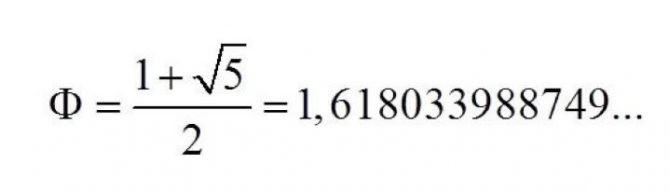
So, with 1.618 (Golden Ratio or Ratio de Oro)… How is this sequence of numbers applied in art, architecture, or design? Well, the composition of the so-called golden rectangle is used because it makes it easier to apply.
The golden rectangle and the golden spiral
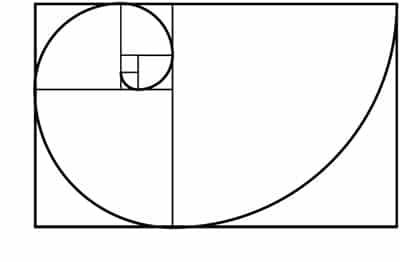
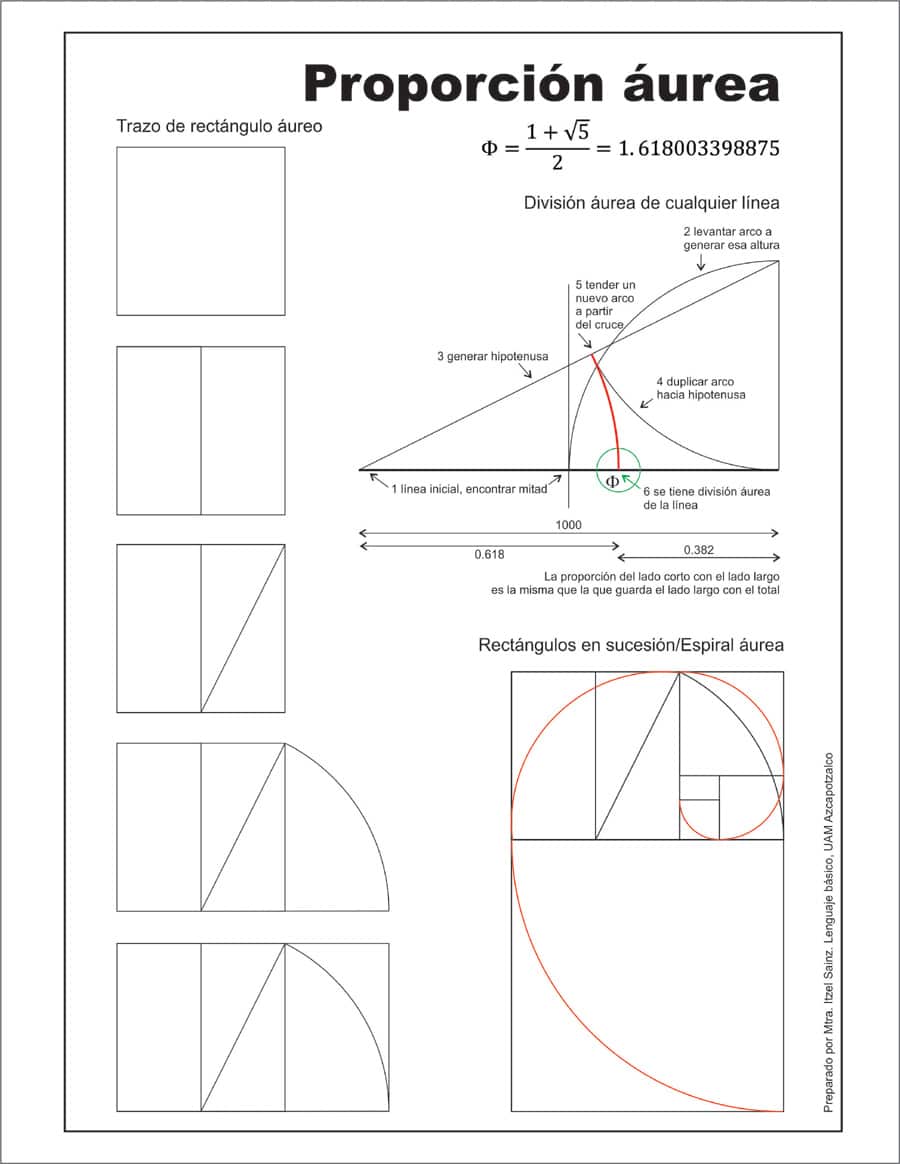
The golden rectangle is a geometric figure whose ratio between length and width is the golden ratio, approximately 1.618, based on the Fibonacci sequence, and whose result is the formation of the golden spiral. To understand it better, we break down the creation step by step in a three-part drawing:
- A.- If we transfer the above numerical sequence to a rectangle we find the following example for better understanding:

- B.- If we follow the division with the Fibonacci succession:
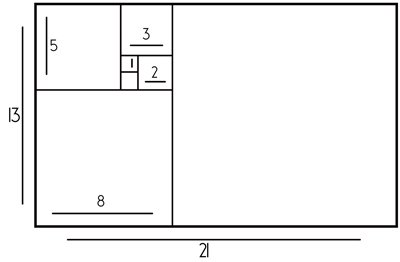
- C.- By joining different vertices of the golden rectangle with a line we will get the famous Golden Spiral that is very present in nature resulting visually a “natural” proportion.
This process is translated in the following summary scheme that you can obtain the PDF from HERE and that surely will be useful for many (I remind you that further on there is a calculator that we can insert values in centimeters to obtain the desired figure)
Subsequently, the fascination has been such throughout history that an Italian mathematician and theologian Luca Pacioli published a book entitled The Divine Proportion ( 1509) in which he gave five reasons to unravel why the golden ratio is divine:
- The fact that it is defined by three segments of a straight line, which resembles the Trinity.
- The uniqueness of the number itself, which resembles that of God.
- If we look at the incommensurability of number, just as God is incommensurable.
- God gave being to the universe through the quintessence, represented at one time by a dodecahedron, and the golden number gave being to the dodecahedron.
- Our God is omnipresent and unchanging, just as this number is.
Before this numerical sequence and its derivations, we can see this video that explores geometry, the Golden Number and much more in the field of nature:
Calculating Golden Proportionality
A useful tool to obtain the measurements in a fast and practical way is the following golden ratio calculator that will help us to find the measurements:
The following video explains how to draw a golden or golden spiral step by step in a simple way:
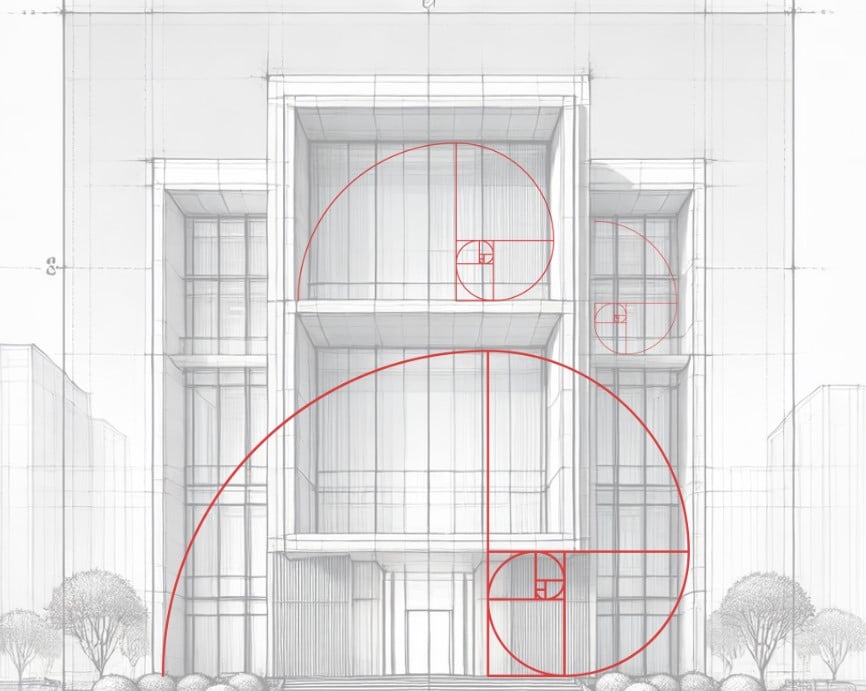
Compare photography with the Fibonacci spiral or the Phi grid
From OVACEN, we have created an interactive tool called Aureus. It allows you to upload photographs and overlay representations of the golden ratio, such as the Fibonacci spiral or the Phi grid.
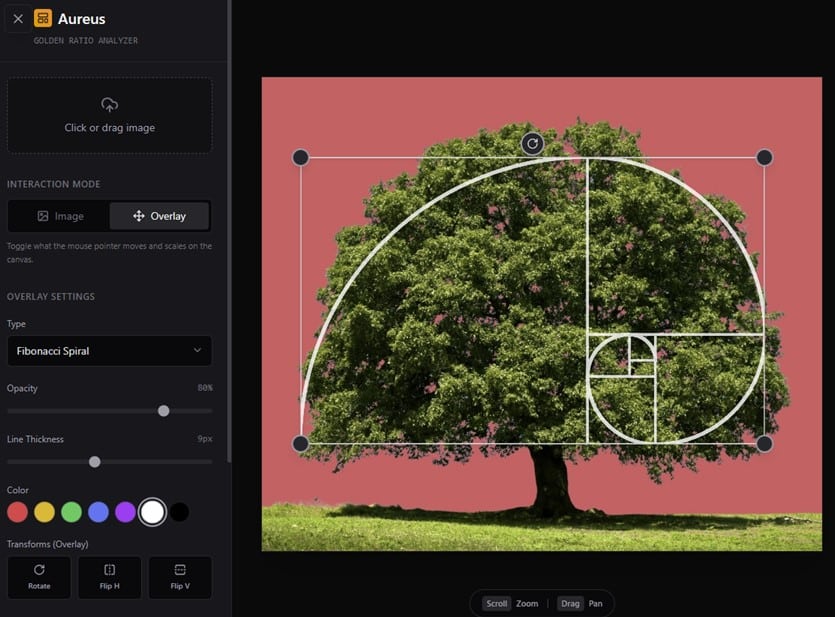
Its purpose is to facilitate the analysis of visual composition, allowing you to freely move, rotate, and scale both the guides and the image to check their mathematical harmony.
Examples divine proportion
If we look around us, there are many examples of golden ratio, in architecture, nature, in the human body, in design or photography, but this time we are going to focus on some that we particularly see many times without realizing it.
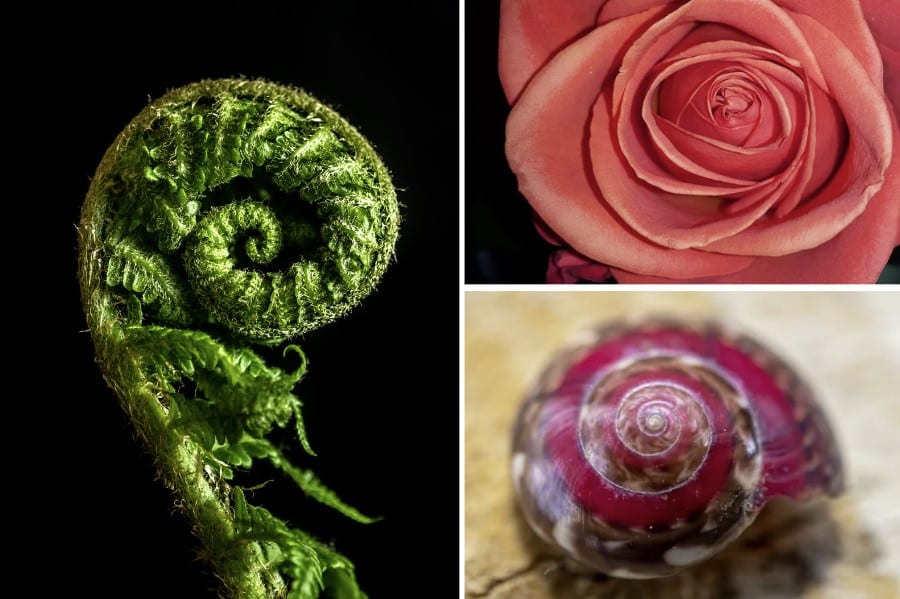
1.- In flowers and plants
In nature we can find many similarities with harmonious geometries; from plants and flowers, through the typical snail shells.
2.- In web page design
In digital design there is also the golden ratio. An example of this can be found on the Twitter website. It’s that simple. Although currently we see it in reverse, it still maintains an aesthetic balance.
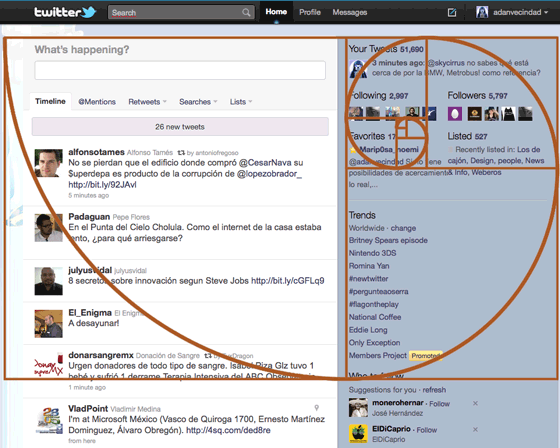
The Golden Ratio transforms an ordinary design into a masterpiece of harmony.
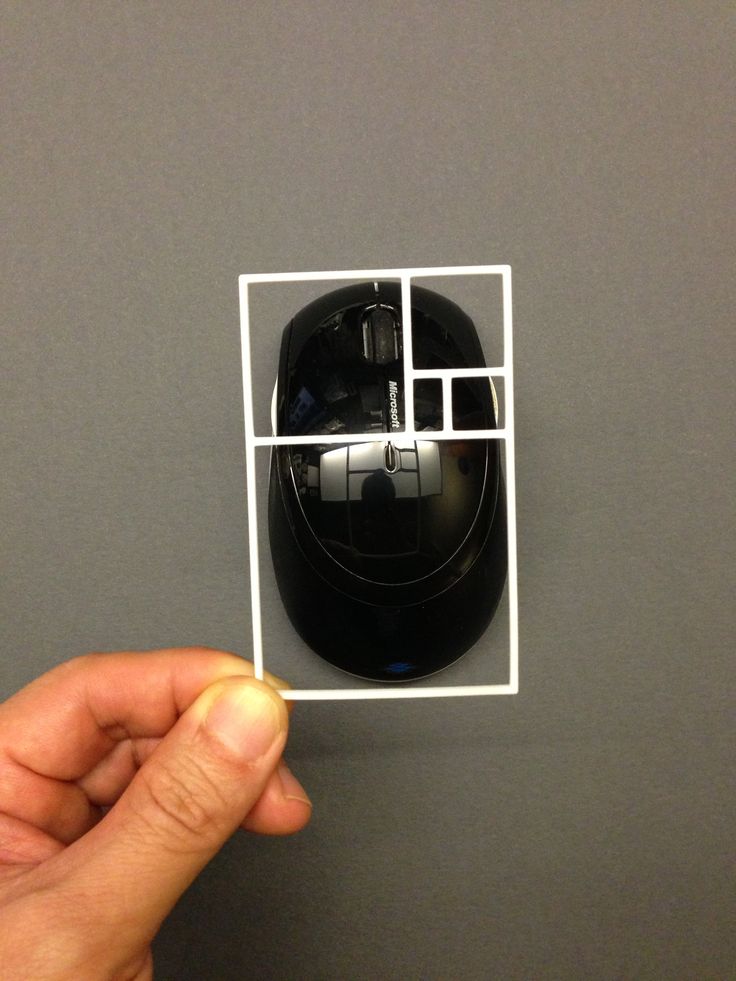
3.- On a computer mouse
The design of a simple computer mouse. Many everyday objects, begin their beginnings in a design based on the golden rectangle although later they are deformed according to needs or utility objectives.
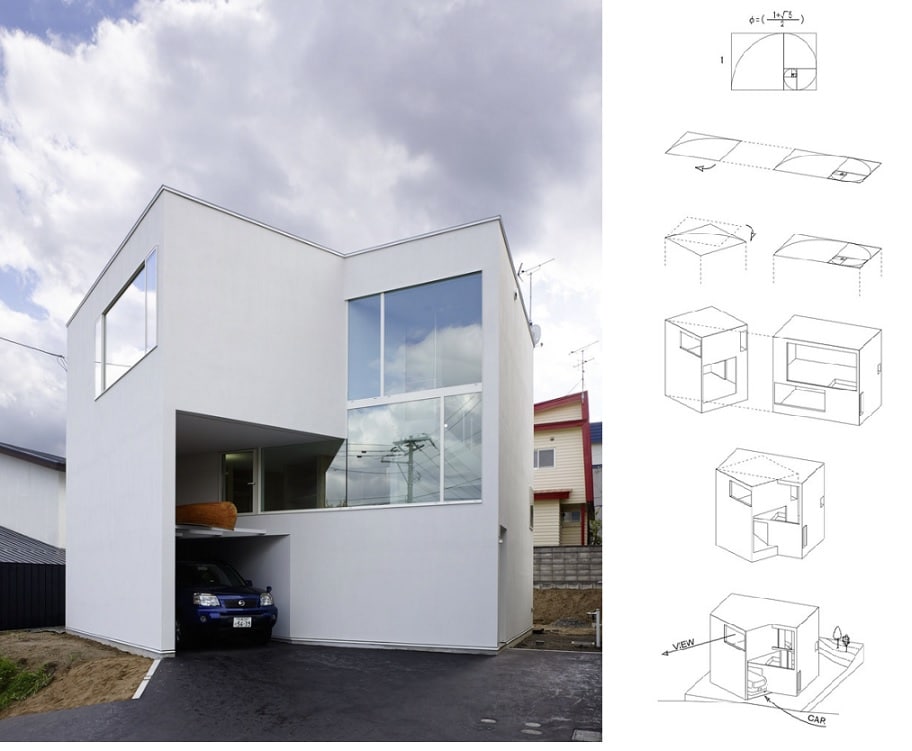
4.- In the construction of houses
In the case of architecture there are modern buildings and houses that are raised from a golden point of view and perspective. This is the case of the Nautilus house:
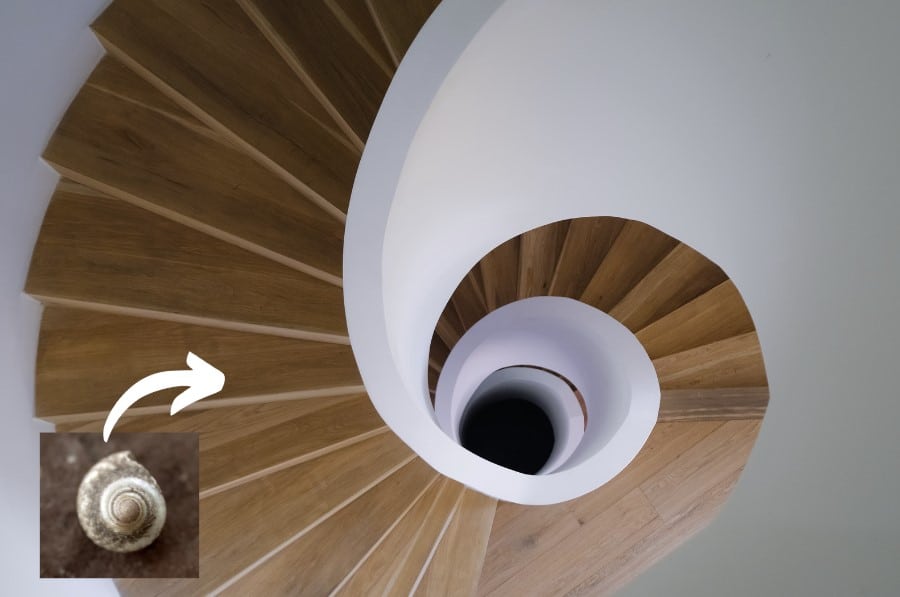
5.- Spiral staircase
Many examples of divine proportion can be found in perfectly designed architectural works or recognize the perfect measures of the human being. One example is the spiral staircase:
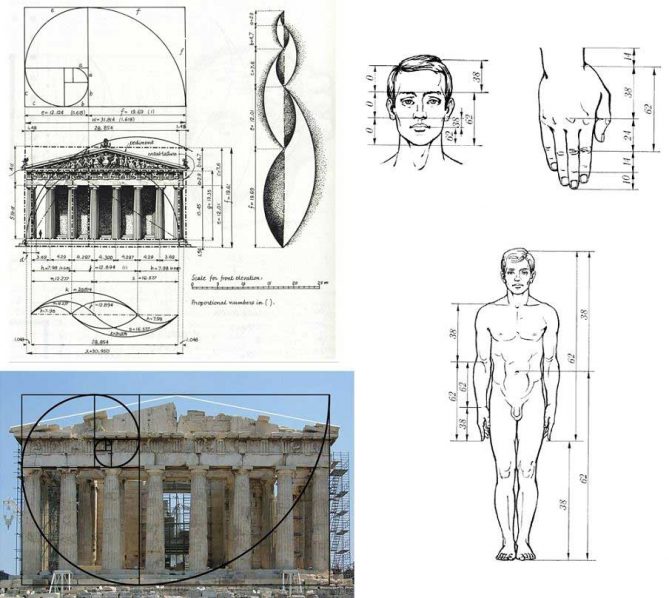
6.- In the ancient Greek constructions
We know that there are many buildings built by the Greeks that bear the “mark” of the Divine Proportion in their exterior visual:
7.- In paintings
Painters were the first to use the golden ratio in a systematic way. Leonardo da Vinci was one of the most outstanding exponents of this use. In his most famous works, such as The Vitruvian Man, La Gioconda and The Last Supper, da Vinci used this technique to create balanced and harmonious compositions.
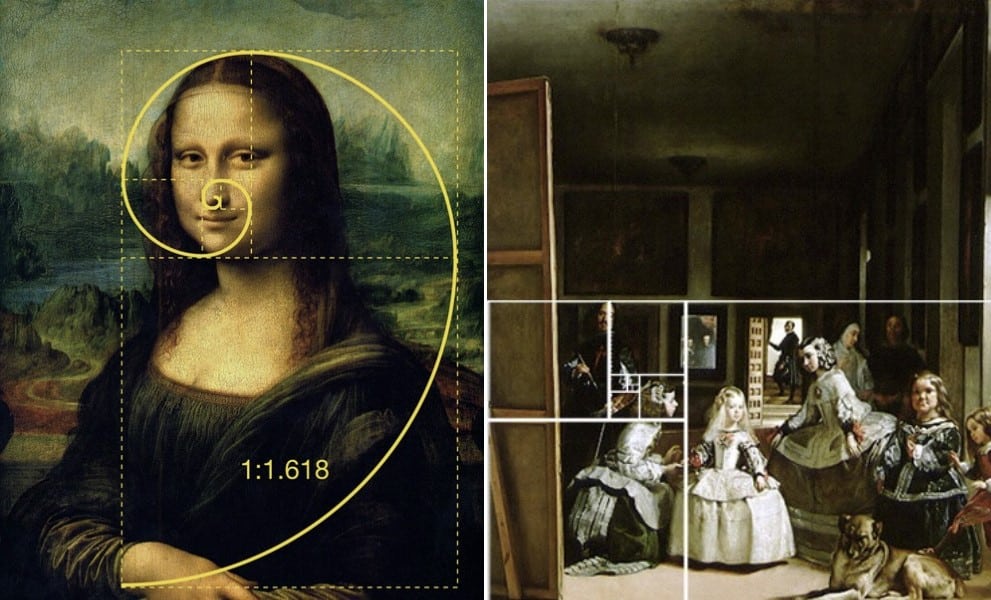
But there is a long list of painters; from Francisco de Goya, Vincent van Gogh, Diego Velázquez, etc.
It makes an image more attractive and visually interesting and can suggest a sense of depth and movement.
8.- In sculpture
In sculpture, it is commonly used to divide the sculpture into two equal parts. Some sculptors who have used this technique in their works are: Michelangelo’s David, Auguste Rodin, Leonardo da Vinci, Jean-Antoine Houdon, etc.
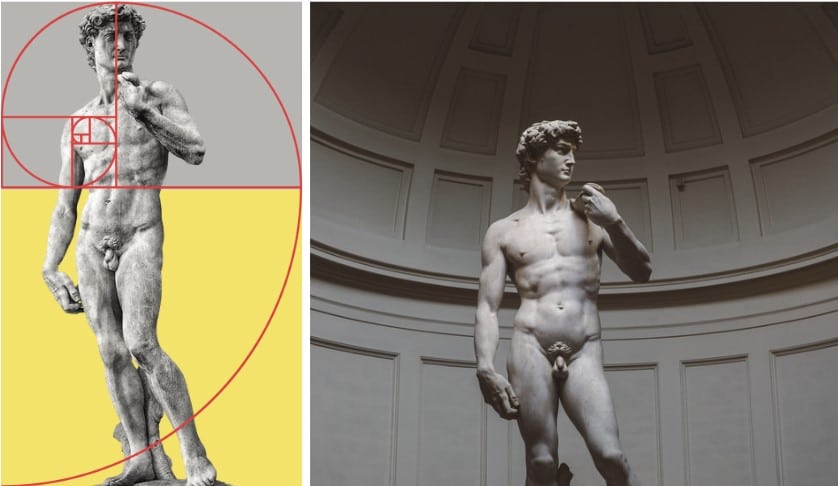
9.- In photography
In the same way as in painting, framing in photography is essential. A common way is to use it to divide an image into two equal parts, so that one part is slightly larger than the other. Some examples
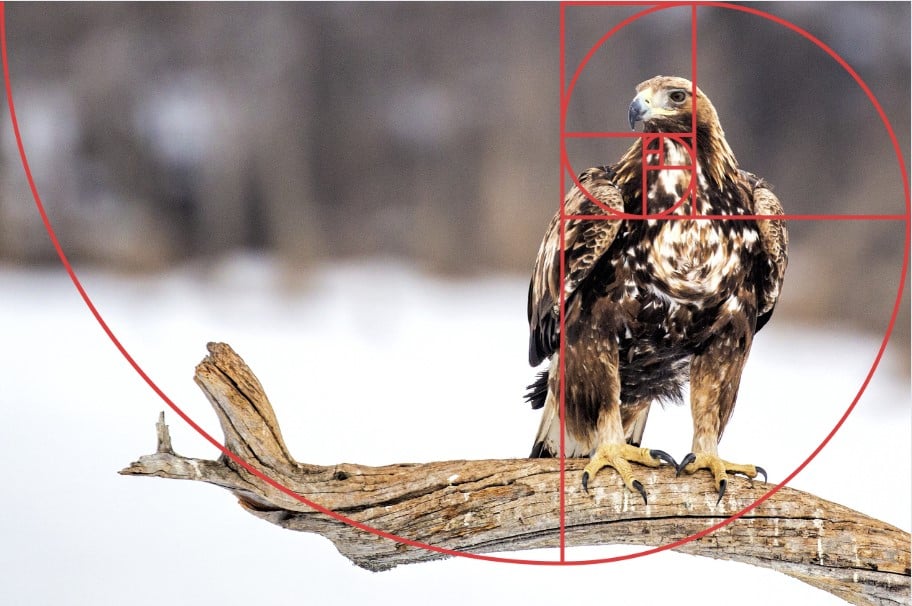
The two-thirds rule is a simplification of the golden rule. This rule divides an image into nine equal parts, using two horizontal and two vertical lines. The intersecting lines are considered strong points in the image, and important objects are often placed at these points.
10.- In Facial Aesthetics
The golden ratio is also applied in facial aesthetics “Golden ratio face” to describe mathematical relationships that are considered harmonious and attractive. Simply put, it refers to an ideal proportion between facial features. For example:
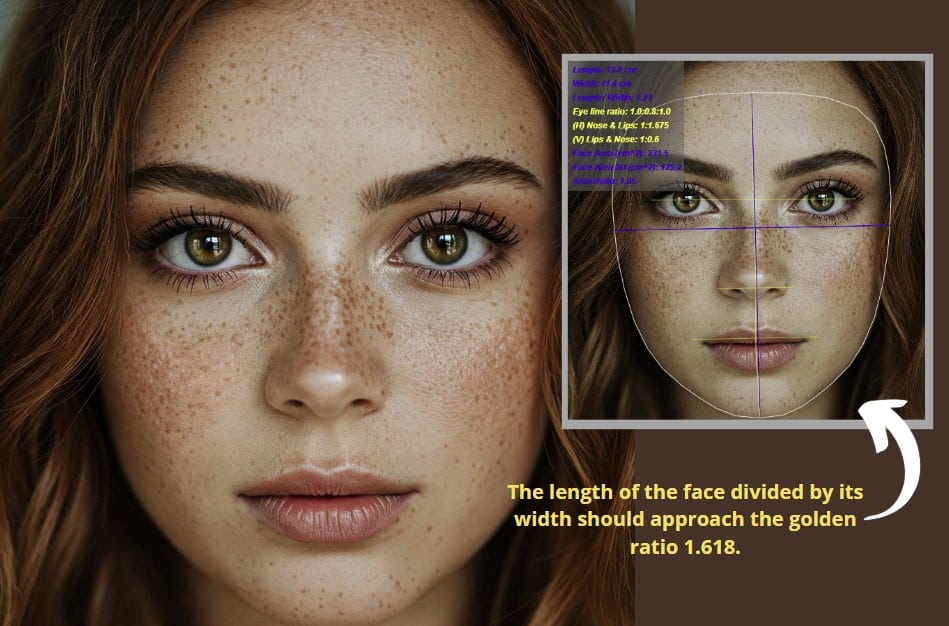
- The length of the face divided by its width should approach the golden ratio of 1.618.
- The distance between the eyes and the mouth in relation to the distance from the hairline to the chin can also follow this proportion.
- Even the size of the nose or the spacing of the eyes may align with this rule in faces perceived as “beautiful.”
This idea originates from historical studies, such as those of Leonardo da Vinci, and has gained popularity in the analysis of facial symmetry and beauty.
How to observe the goldenratio
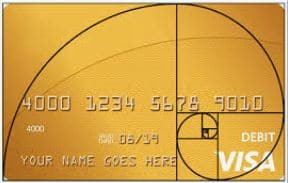 The aesthetic harmony and beauty changes the way we see objects, for example, objects that psychologically could have obvious negative connotations such as cigarette packs or credit cards, are golden rectangles because it gives them a certain aesthetic beauty, this is called “marketing”…
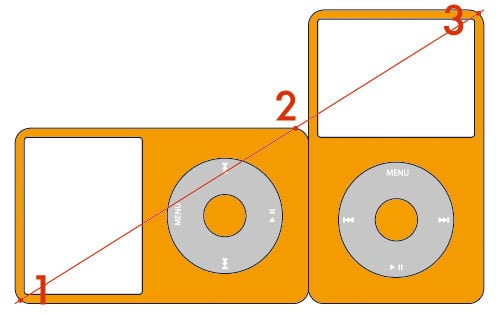
To quickly find out how to get the golden ratio in an object just put it next to another, short side next to long side and draw a diagonal from the top and bottom corner of the set, if three vertices are aligned, is that the golden composition is met in design of objects. The representative example would be:
.
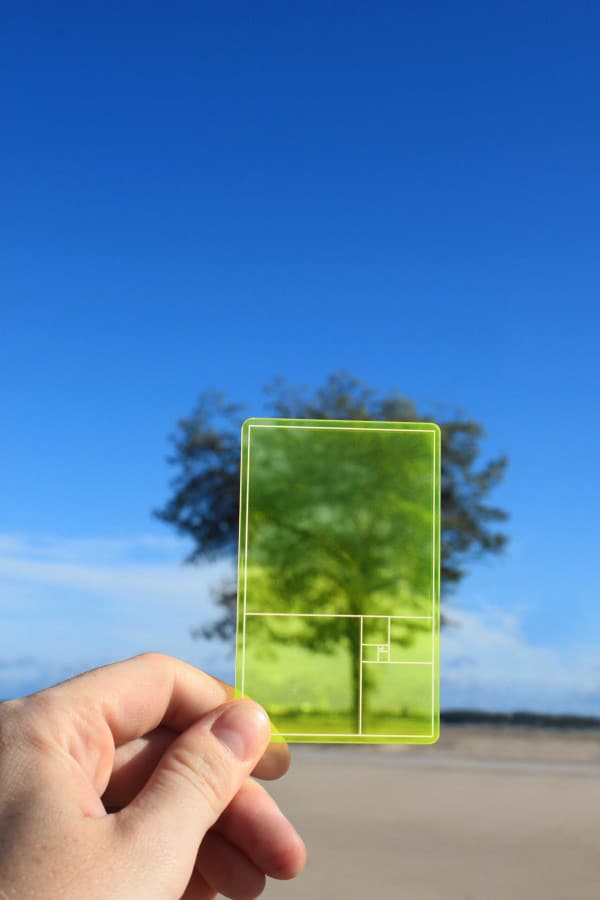
A “toy” that has fascinated us for its simplicity and the way it superimposes the golden spiral on any shape is the Golden Section Finder designed by the Areaware studio. A thin card, the size of a pocket that helps to locate perfection and proportionality in everyday elements or in nature itself.
To learn more in PDF documents
- Golden section in art and architecture…. Consult from HERE.
- Examples of divine proportion in art from HERE.
- T. Antony Davis and Rudolf Altevogt, “Golden Mean of the Human Body”… Consult from HERE.
If you liked the article, share it!