Dry-laid ceramic flooring: quick and easy!
Innovation in construction keeps surprising us, and this time we are presented with a system for installing dry-laid ceramic flooring, without the need to use adhesive mortar.
Are you thinking about changing the flooring in your home? I can already assure you that by using OndaBlock’s dry ceramic tiles, it’ll be easier, faster, and you can even do it yourself
Now you can install ceramic floors without complications! The system is 8 times faster than traditional tile installation
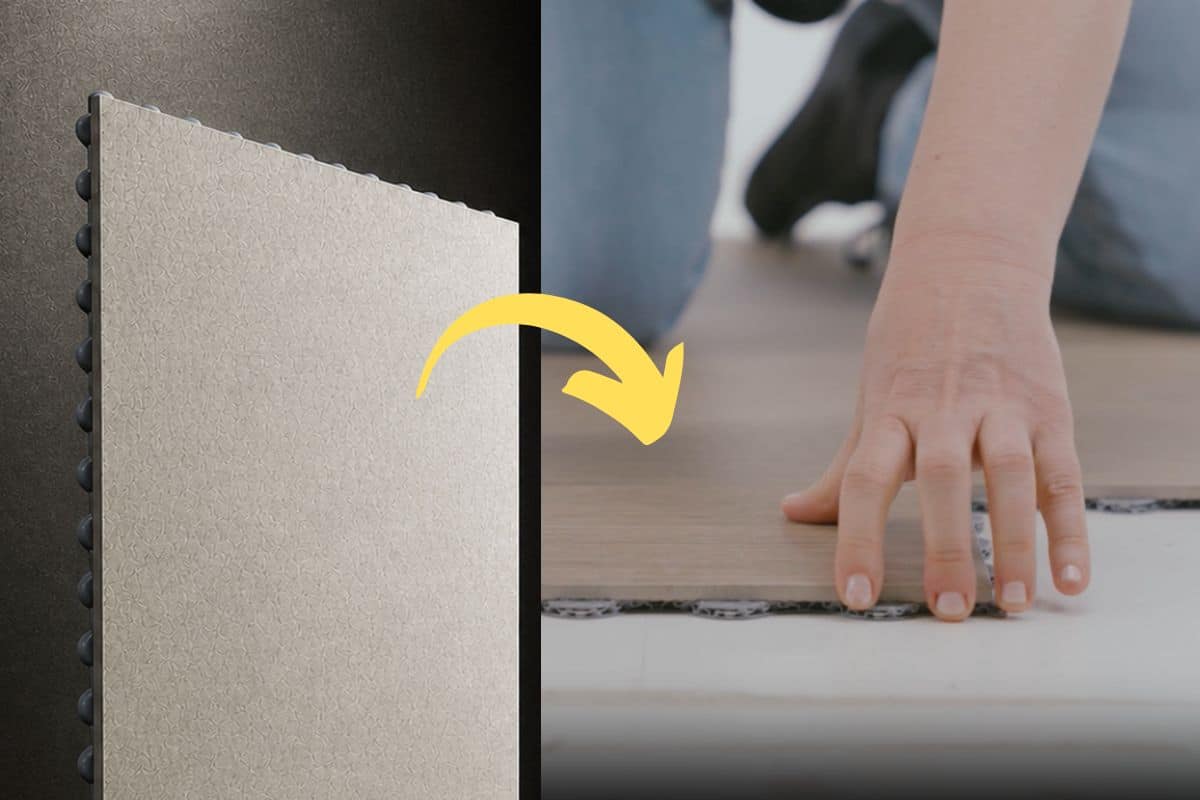
The startup OndaBlock presents an innovative dry-installation system for ceramic flooring that uses recycled thermoplastic polymer as a substitute for adhesive mortar.
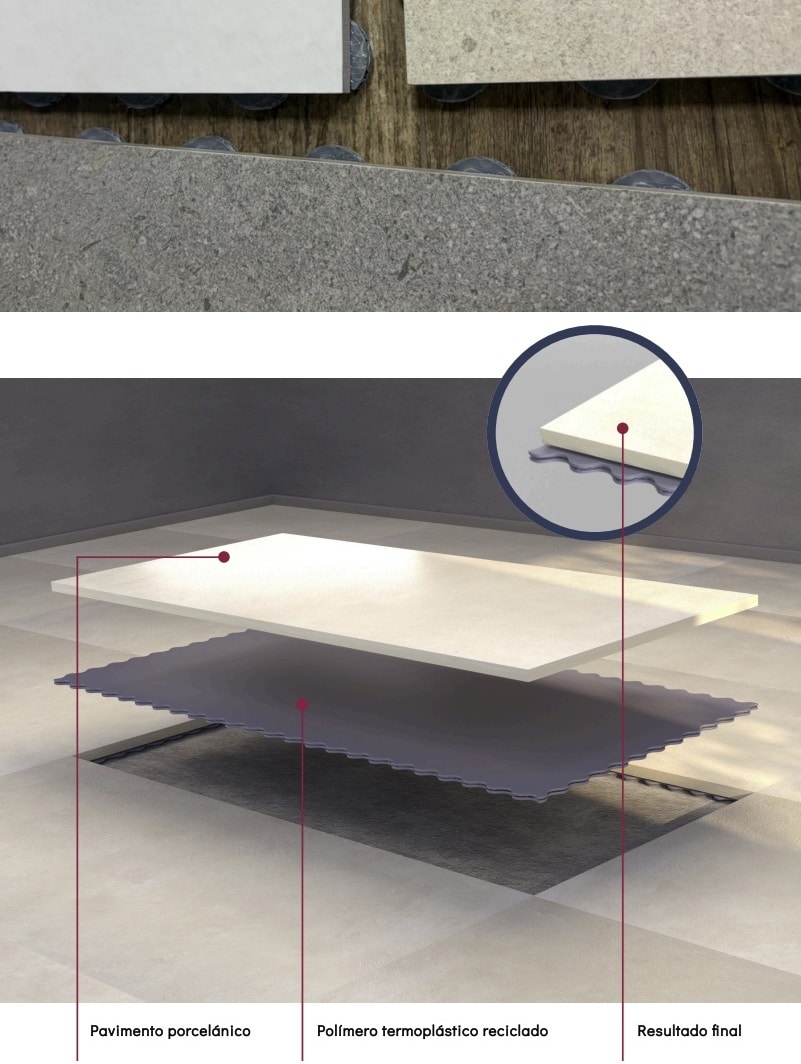
Structurally, the product is made up of two joined elements: the upper part is the surface of the porcelain flooring (at first glance, it looks like a traditional tile), and the lower base is a thermoplastic polymer with side anchors.
🟧 Note: Also worth seeing is the tile-laying robot, one tile every 40 seconds — almost nothing!
How does the system work?
The operation for laying these ceramic pieces dry is based on geometry and floating installation, that is:
- Assembly using curved edges: The polymer base incorporates an exclusive wavy-edge system that allows the pieces to fit together precisely, similar to a puzzle, without requiring special tools.
- Direct installation: It works by being installed directly over the existing floor (such as concrete, previous ceramic flooring, or parquet), provided that the surface is level, firm, dry, and clean.
- Grouting for stability: Although the installation is dry, the system requires the mandatory application of grout material between the joints of the ceramic tiles.
The final grouting seals the system, gives it maximum stability against use, and ensures its waterproofing
This new material, by not requiring preparation time for mortar or adhesive, nor waiting time for the bonding material to dry, makes this installation method much faster than traditional tile laying.
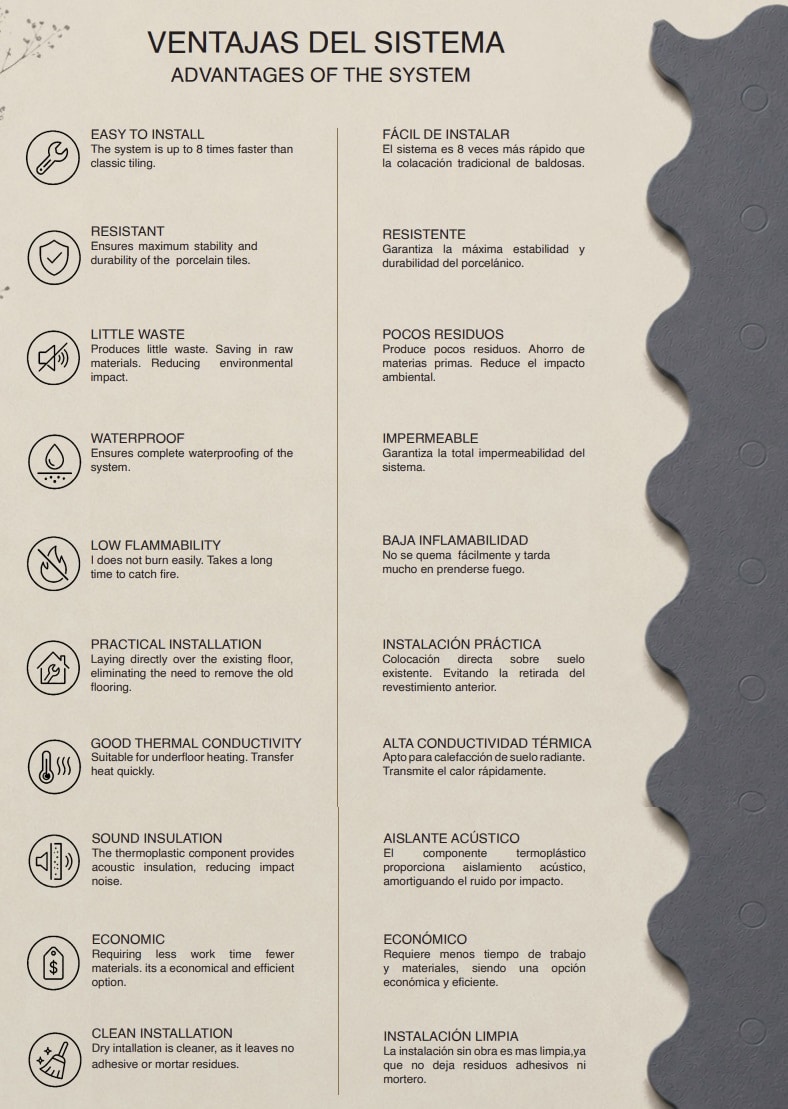
Not to mention the advantage of avoiding possible poor application of the adhesive mortar, waste, and many other problems that arise if you do not have a good, experienced builder. See the advantages in the following image:
The recycled polymer provides a certain structural flexibility that, combined with the requirement to leave a perimeter joint (a 5 to 10 mm gap between the floor and the walls, with sealing), allows the system to absorb natural thermal expansion without generating stress.
Obviously, we have to remember that you will almost certainly need to cut some pieces. So, at the very least, you need to be somewhat handy because you will have to use an electric angle grinder for cutting or a manual ceramic tile cutter.
Even so, especially for renovations where we already have a fairly level base floor, I see it as a practical and useful system where we can potentially save a few euros.
To point out one drawback of this system, the pieces in the catalog measure 60 x 120 cm, which is a heavy and inconvenient format to handle.
Frequently ssked questions about dry flooring and dry tile systems
What is dry tile installation?
Dry tile installation is a system where tiles are not glued down with cement or adhesives. Instead, they are placed on a special base that allows the pieces to click or fit together like a puzzle.
What are the advantages of installing dry flooring?
The advantages of installing dry flooring systems are multiple: quick installation, clean execution without wet works, labor cost savings, easy repair or removal if a piece breaks, and less added weight to the building’s structure.
Can a dry ceramic floor be installed outdoors?
Yes, a dry ceramic floor can be installed in outdoor areas if the surface is stable, has a slope to drain water, and technical joints and conditions are respected.
Does dry flooring experience thermal expansion?
Yes, floors installed using dry systems undergo thermal expansion, so perimeter and structural joints must be respected to allow for movement.
Must the surface be flat and level to install a dry ceramic floor?
Yes, dry floor installation requires a fairly flat surface. Any significant unevenness or defects in the base must be corrected beforehand.
What levelness tolerances does a dry flooring system allow?
A dry-installed subfloor allows a maximum unevenness tolerance of 3 mm using a 2 m straightedge, with no isolated irregularities greater than 2 mm.
Can dry flooring be installed over carpet or flexible materials?
It is not recommended to install dry flooring over carpet or unstable finishes; it must be placed on firm, rigid, and stable surfaces.
What is the maximum allowable moisture content for a dry ceramic floor?
As a guideline, the moisture level permitted for dry floors is 2% for cement-based substrates and 0.5% for anhydrite bases.
Can a dry floor be installed without grouting?
No, a dry floor cannot be installed without grouting. Grouting is essential for the stability, protection, and warranty of the system. Additionally, a perimeter joint of at least 5 mm is required next to walls, pillars, frames, and other vertical elements.
Can a dry ceramic tile piece be placed directly onto mortar?
No. Dry flooring systems are designed to be installed without traditional bonding mortar.
Can dry flooring be installed over underfloor heating?
Yes, provided that the system is stabilized, turned off 24-48 hours beforehand, and the thermal protocol is strictly followed.
Can a dry floor system be used in bathrooms or wet areas?
Yes, dry flooring can be installed in wet areas, but the substrate must be properly waterproofed and executed, as the tile joints themselves are not waterproof.
Can an individual tile be replaced in a dry flooring system?
Yes, these systems function in a way that allows individual tiles to be replaced. You simply need to remove the grout from that specific area, use a utility knife to cut the plastic tabs connecting it to the adjacent pieces, extract it, and put a replacement module in place.